

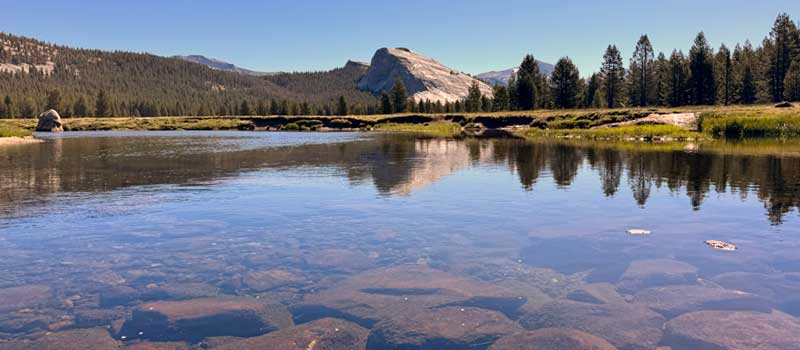
California. Water, water everywhere
I recently escaped to California with my son for a proper boys’ trip. He had one goal, the FIFA Club World Cup. I had another: mountains, coastlines and some of the most spectacular scenery in America.
I promised myself I wasn’t going to work, but…
California and southern Australia have so much in common when it comes to water. Both have similar long dry periods, unpredictable rainfall and the constant balancing act between cities, agriculture and the environment. So, while everyone else admired the views, I couldn’t help noticing the rivers, reservoirs, irrigation channels and the infrastructure supporting it all.
Here’s a few observations from a fantastic holiday. And yes…I really did switch off (mostly).
Yosemite – where it all begins
Yosemite welcomes around four million visitors each year.
Sitting beside the Merced River, with melted snow tumbling down from the granite cliffs above, it was impossible not to appreciate how this water eventually helps power California’s economy.
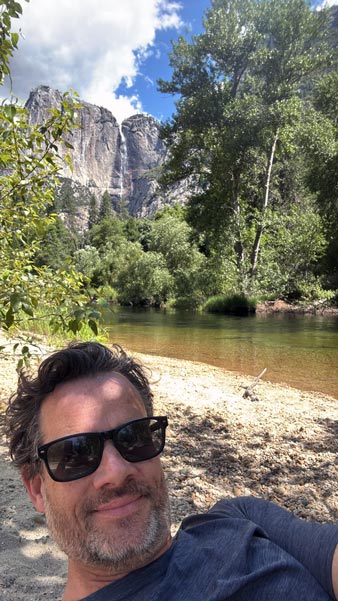
As I sat there enjoying the view (not working), I found myself wondering where four million visitors actually go to the toilet.
Apparently I’m not the only one who’s asked.
Yosemite Valley’s wastewater treatment plant has been operating more than 45 years. For those in the business, you’ll know that means it’s probably not keeping up with demand! Fortunately I’ve found out that a recent injection of US$239m in funding will modernise the facility, allowing it to treat around 3.8 megalitres of wastewater each day before protecting the pristine catchments downstream. It’s due for completion in 2029 and estimated to save nearly $300k a year in ‘operational work arounds’.
Not exactly the attraction people queue to see, but arguably one of the park’s most important pieces of infrastructure no one sees or thinks about.
The little plant doing a very big job
About 80 kilometres further up Tioga Road sits Tuolumne Meadows at 8,600 feet above sea level.
Snow covers the area for much of the year, yet during summer hundreds of thousands of visitors arrive to experience the high country.
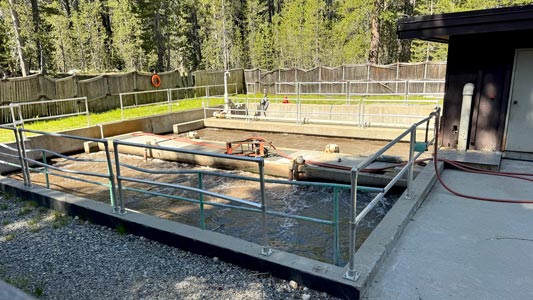
This tiny wastewater treatment plant processes somewhere between 350,000 and 500,000 visitors’ “number ones and twos” each season.
It’s probably one of the hardest working little treatment plants I’ve come across.
What it’s protecting
Standing beside the crystal clear streams, it’s easy to understand why protecting these catchments matters.
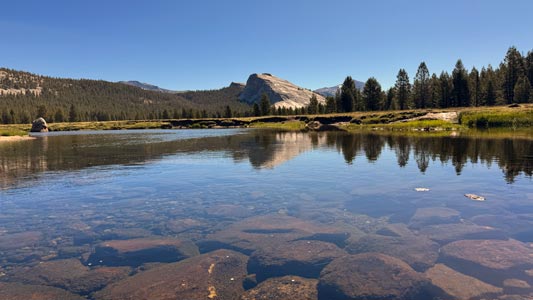
This water eventually feeds Hetch Hetchy Reservoir, supplying drinking water to around 2.7 million people across the San Francisco Bay Area (~290km away) while also generating hydroelectric power.
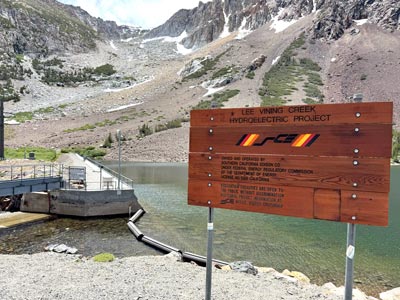
Here’s a little hydro plant cradling the Tioga Pass. Breathless (literally at 9,000 ft) my son was excited to touch the snow.
It’s a reminder that every litre starts somewhere beautiful.
California’s food bowl
Leaving the mountains, we descended from over 9,000 feet to sea level, passing through what can only be described as irrigation on an epic scale.
Roughly 40% of the land in California produces over 400 commodities, generating more than $50b in annual revenue, and employs over 420,000 people. Most farm revenue comes from irrigated crops. Check out the extent of production on google maps here.
To keep California’s production going, California Department of Water Resources reports that around 34 million acre-feet of water are used in an average year, roughly 42,000 gigalitres. For perspective, that’s more than twice Australia’s total annual water consumption (ABS reported just over 17GL Australia wide in 2023/24)
The irrigation channels seemed endless, carrying water that underpins one of the world’s most productive agricultural regions.
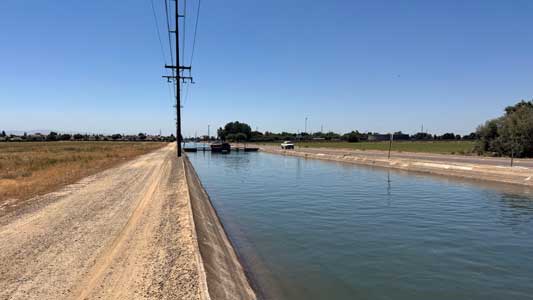
Then there was the ocean…
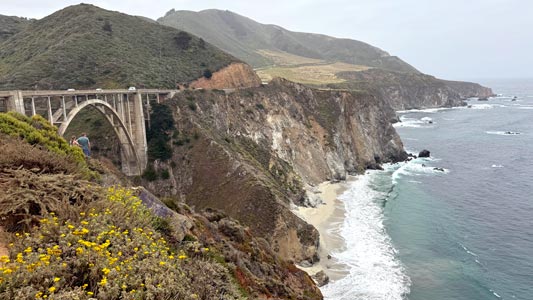
If Yosemite shows how valuable freshwater is, Big Sur reminds me just how spectacular water can be.
With the sunroof open (it was only a Mazda, not quite the convertible I had hoped for), we cruised Highway 1, taking in dramatic cliffs, crashing surf and the famous Bixby Creek Bridge.
Sometimes you don’t need statistics.
The view says enough.
Hidden gems
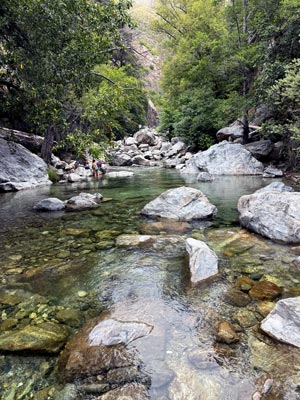
Just off the highway we stumbled across towering redwoods and beautiful crystal clear creeks that almost escaped our itinerary.
Those unplanned discoveries often become the best memories.
A fitting finish
I’ll spare you the dozens of dreamy California beach photos (there are plenty!), and the stark reminder of the fires that swept through parts of Malibu, and instead finish with our first Fourth of July in America.
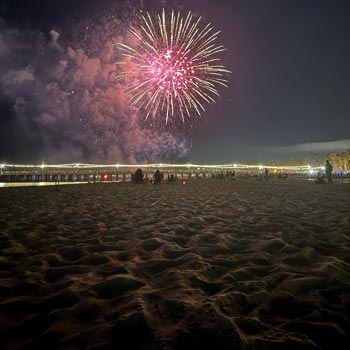
Families spent the day gathered along the shoreline before fireworks lit up the night sky over the Pacific, a pretty special way to end a memorable trip with my son.
Looking back, I realised almost every highlight of the trip had involved water in some way. Mountain streams, lakes, reservoirs, irrigation channels, rivers, forests, beaches and the ocean.
Maybe that’s just how I see the world.

No Comments